
Hair transplantation has undergone a significant technological transformation, evolving from conventional surgical procedures to intelligent, minimally invasive techniques supported by artificial intelligence, robotics, and automated instruments. As patients and medical professionals seek more efficient hair restoration solutions, one question is becoming increasingly important: What is the fastest hair transplant method 2027?
Among the advanced approaches to surgical hair restoration, AI-assisted robotic Follicular Unit Extraction (FUE) is emerging as one of the most promising technologies for improving procedural efficiency while maintaining surgical precision.
At the forefront of this innovation is the FUEsion X Robotic Hair Transplant System, an advanced hair restoration platform that combines artificial intelligence (AI), robotic assistance, computer vision, augmented reality (AR), suction-assisted follicular extraction, and automated implantation technology.
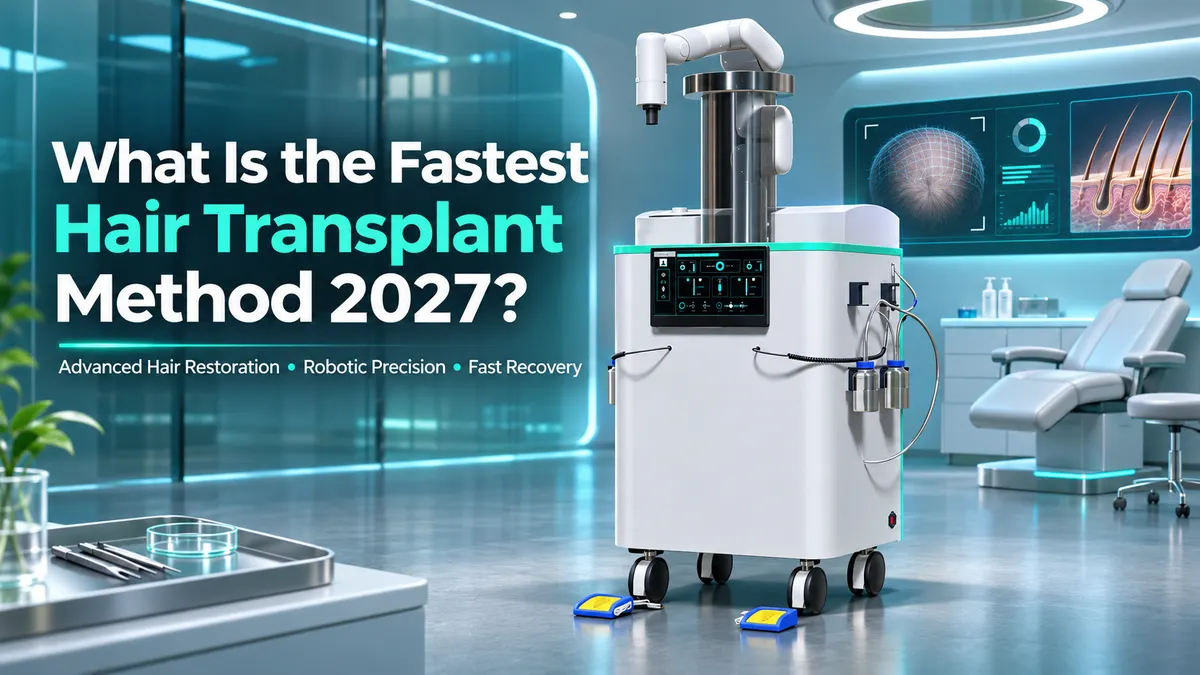
At the forefront of this innovation is the FUEsion X Robotic Hair Transplant System, an advanced hair restoration platform that combines artificial intelligence (AI), robotic assistance, computer vision, augmented reality (AR), suction-assisted follicular extraction, and automated implantation technology.
Unlike traditional hair transplant equipment that primarily focuses on graft harvesting, FUEsion X integrates multiple stages of hair transplantation into a coordinated surgical workflow, from initial scalp analysis and treatment planning to follicular extraction, graft preservation, and implantation.
Its intelligent features are designed to reduce repetitive procedural steps, support precise graft handling, and help physicians complete hair restoration procedures more efficiently.
For patients, this technology provides an advanced approach to minimally invasive hair restoration. For physicians, it offers intelligent tools designed to improve surgical efficiency, visualization, and procedural control.
Let's explore how FUEsion X is advancing faster robotic hair transplantation in 2027 and what makes its technology different from conventional hair restoration methods.
What Is the Fastest Hair Transplant Method in 2027?
AI-assisted robotic FUE is one of the most advanced hair transplant methods designed to improve surgical speed and efficiency in 2027. By combining robotic imaging, intelligent treatment planning, advanced extraction instruments, and automated implantation, this approach can streamline important stages of hair restoration.
Traditional FUE involves individually harvesting hair follicles from the donor area and implanting them into thinning or bald regions. Because thousands of follicular units may need to be extracted, prepared, and implanted, the procedure can require several hours of meticulous surgical work.
Modern robotic-assisted technologies address some of these time-consuming steps through intelligent surgical assistance.
The most important advancements include:
AI-Powered Hair Analysis: Helps identify follicular units and plan graft requirements.
Robotic Camera Tracking: Reduces the need for repeated manual camera positioning.
Suction-Assisted Extraction: Streamlines follicular harvesting and reduces repetitive handling.
Automated Graft Counting: Supports efficient monitoring of harvested follicles.
Integrated Graft Preservation: Helps organize follicular storage between extraction and implantation.
Automated Implantation: Supports consecutive graft placement using specialized instruments.
Voice-Controlled Operation: Allows surgeons to adjust selected system functions without interrupting their work.
The FUEsion X Robotic Hair Transplant System combines these innovations within a comprehensive surgical platform.
However, no single technique has been established as the fastest for every patient. Overall procedure duration depends on the number of grafts, hair characteristics, surgeon experience, and treatment complexity.
Understanding Hair Transplant Methods: Which Techniques Are Faster?
Different hair transplantation methods involve distinct extraction and implantation processes.
1. Follicular Unit Transplantation (FUT)
FUT involves surgically removing a strip of scalp tissue from the donor area and separating it into individual follicular units.
The technique allows multiple grafts to be prepared from a single strip, but it requires a linear incision, wound closure, and subsequent healing.
The overall surgical duration varies with graft requirements and team efficiency.
2. Traditional Follicular Unit Extraction (FUE)
FUE involves removing individual follicular units directly from the donor region using specialized punches.
It avoids the long linear donor incision associated with FUT and generally produces multiple small extraction sites.
However, harvesting thousands of follicles individually requires careful positioning, extraction, graft handling, and surgical coordination.
3. Direct Hair Implantation (DHI)
DHI commonly refers to an FUE-based technique that uses specialized implanter pens for graft placement.
It can streamline selected implantation steps, but its total procedure duration depends on graft preparation, harvesting, and the surgical team's technique.
4. AI-Assisted Robotic FUE
Robotic-assisted FUE integrates intelligent imaging, automated mechanisms, robotic positioning, and advanced implantation instruments.
These technologies are designed to improve workflow efficiency while supporting careful follicular harvesting and placement.
The FUEsion X system represents this integrated approach by combining extraction assistance, intelligent planning, and automated implantation within one platform.
FUEsion X Robotic Hair Transplant System: The Future of Hair Restoration Technology
The FUEsion X Robotic Hair Transplant System is an advanced surgical platform that integrates AI-assisted analysis, robotic camera positioning, augmented reality, and automated instruments to support modern hair transplantation.
One of its defining features is its surgeon-assisted robotic approach.
Rather than relying on fully autonomous follicular harvesting, the system enhances the surgeon's ability to visualize, select, extract, and implant hair follicles.
This combination of human expertise and robotic assistance is designed to improve precision while preserving the surgical judgment necessary for natural-looking hairline design.
Its integrated technology supports several important stages of hair restoration:
Patient consultation and AI-assisted result simulation.
Donor area analysis and follicular identification.
Robotic camera positioning and surgical visualization.
Controlled follicular extraction.
Graft counting, handling, and preservation.
AI-supported implantation planning.
Automated follicular implantation.
By bringing these capabilities together, FUEsion X offers a comprehensive technological approach to hair restoration.
Advanced Features of the FUEsion X Robotic Hair Transplant System
1. AI Camera With 50x Magnification for Precision FUE
One of the most significant innovations in FUEsion X is its AI-powered camera, featuring up to 50 times magnification.
Successful follicular extraction requires an accurate understanding of hair direction, angulation, and follicular structure. Even minor inaccuracies during harvesting can damage follicles and affect graft quality.
The advanced AI camera provides detailed visualization of individual follicular units, allowing surgeons to better identify extraction targets and position instruments appropriately.
Key advantages include:
Enhanced visibility of hair follicles and surrounding scalp structures.
Improved identification of follicular direction and angle.
More precise guidance during follicular harvesting.
Reduced risk of graft transection through better visualization.
Additional support when working with curly, wavy, fine, or complex hair types.
By integrating intelligent imaging with advanced magnification, FUEsion X supports careful follicular extraction and improved surgical control.
2. AI-Powered Donor Area Analysis
The donor area plays a critical role in determining the success of any hair transplant procedure.
FUEsion X incorporates intelligent donor analysis technology that helps surgeons evaluate follicular characteristics and develop an appropriate harvesting strategy.
Its AI-assisted system identifies follicular units containing different numbers of hairs, including single-, double-, triple-, and four-hair grafts.
This allows surgeons to strategically select follicular units according to the requirements of the recipient area.
For example, single-hair grafts are generally preferred for creating a soft, natural-looking frontal hairline, while multi-hair grafts can provide additional density in other regions.
Intelligent donor analysis supports more organized graft selection and helps physicians plan treatment while considering the patient's available donor resources.
3. Five-Degree-of-Freedom Robotic Arm
The 5DOF robotic arm is a defining component of the FUEsion X system.
Designed to provide flexible movement and controlled positioning, the robotic arm automatically directs the AI camera toward targeted extraction areas.
It also helps maintain visualization of the operative field by tracking the surgeon's handpiece throughout extraction.
The robotic arm supports:
Automated positioning of the AI imaging camera.
Systematic donor area scanning.
Real-time monitoring of selected extraction regions.
Tracking of the surgeon's extraction instrument.
Stable visual guidance during follicular harvesting.
Unlike fully autonomous surgical approaches, FUEsion X emphasizes human-assisted robotics.
The surgeon remains actively involved in the procedure, combining medical expertise with robotic assistance to support precision, flexibility, and individualized surgical decisions.
4. Augmented Reality Glasses for Enhanced Surgical Precision
Hair transplantation requires prolonged concentration and careful visual assessment.
FUEsion X incorporates advanced augmented reality glasses that display high-resolution, magnified scalp images directly within the surgeon's field of view.
This technology helps surgeons view detailed follicular information while maintaining a more comfortable working posture.
By reducing the need to repeatedly bend toward the patient's scalp or look away at separate monitors, AR glasses can improve ergonomics during lengthy procedures.
The integration of augmented reality with AI-powered imaging supports continuous visualization, enhanced concentration, and more convenient surgical operation.
5. AI Hair Studio: Advanced Hair Transplant Result Simulation
The FUEsion X Robotic Hair Transplant System features AI Hair Studio, an intelligent hair transplant simulation and personalized planning tool.
Using the patient's own photographs, AI Hair Studio generates realistic visual previews of potential hair restoration outcomes. It allows surgeons to estimate the required number of grafts, design personalized hairlines, and plan graft distribution across different scalp areas.
The system also enables multiple treatment simulations with different graft counts, coverage options, and hairline designs.
By helping patients visualize potential results before undergoing surgery, AI Hair Studio enhances consultation transparency, supports informed decision-making, and provides valuable guidance for individualized surgical planning. Simulated results are illustrative rather than guaranteed outcomes.
6. Dual-Sided Automated Follicular Extraction
One of the major challenges in FUE hair transplantation is the time required to harvest individual follicular units.
FUEsion X addresses this challenge through its innovative dual-sided, suction-assisted extraction technology.
This system is designed to streamline graft harvesting by combining follicular scoring and extraction into an efficient workflow.
Its dual-sided configuration also supports coordinated extraction operations, potentially reducing the time required for harvesting compared with more labor-intensive approaches.
The technology is designed to provide:
Faster and more organized follicular extraction.
Reduced unnecessary handling steps.
Improved procedural workflow.
Efficient harvesting during larger transplant sessions.
Greater operational convenience for surgical teams.
Actual extraction speed depends on the surgeon, patient characteristics, graft requirements, and clinical conditions.
7. Advanced Safety Handpieces and Precision Punches
Protecting follicular integrity is essential during hair transplantation.
The FUEsion X system incorporates specialized low-speed handpieces and safety punches designed to support controlled harvesting while minimizing unnecessary tissue trauma.
Its high-torque, low-speed handpieces provide controlled cutting action, while specialized guarded punches help standardize insertion depth.
The blunt punch design is intended to limit unnecessary tissue damage and reduce the likelihood of follicular injury.
Together, these components provide surgeons with additional control over extraction depth and instrument movement.
By supporting careful graft harvesting, they help address one of the most important concerns in FUE transplantation: preserving healthy follicular units for successful implantation.
8. Integrated Cold Storage Chambers for Graft Preservation
Once hair follicles are extracted, maintaining appropriate graft preservation conditions becomes an important part of the transplantation process.
FUEsion X includes integrated cold storage chambers designed to protect harvested follicular units while they remain outside the scalp.
These chambers help maintain suitable storage conditions and reduce the risk of graft dehydration.
Proper graft preservation can support follicular viability and complement careful extraction and implantation techniques.
By incorporating dedicated storage chambers into the system, FUEsion X creates a more coordinated workflow between follicular harvesting and transplantation.
9. AI-Assisted Implantation Planning
Natural-looking hair restoration requires strategic graft placement rather than simply implanting the maximum possible number of follicles.
The FUEsion X AI implantation planning system assists surgeons in evaluating the patient's hair loss pattern, donor availability, desired density, and required graft distribution.
It helps determine how different follicular units should be allocated throughout the recipient region.
For example, the surgical plan may prioritize softer single-hair grafts along the frontal hairline and larger follicular units in regions requiring greater density.
This digital planning approach supports individualized hairline design, balanced graft distribution, and efficient use of available donor follicles.
The surgeon remains responsible for translating the treatment plan into an appropriate surgical strategy.
10. FUEsion Atraumatic Automated Implanter
The FUEsion Atraumatic Automated Implanter introduces another important technological advancement.
This specialized pneumatic device is designed to support consecutive graft implantation without requiring separately created recipient channels or slits.
Its design allows up to 100 consecutive graft implantations, helping streamline the implantation stage.
The system incorporates controlled placement mechanisms intended to improve implantation consistency and support appropriate graft depth.
Potential benefits include reduced interruptions during implantation, efficient graft placement, and less manual instrument handling.
However, achieving natural-looking results still requires skilled surgical judgment regarding hair direction, angle, density, and recipient-site design.
11. Machine Talk Technology and Intelligent Operating Controls
FUEsion X incorporates Machine Talk technology, enabling surgeons to operate selected machine functions through voice commands.
This hands-free capability reduces the need for repeated interaction with physical controls during surgical tasks.
The system also includes a 15-inch interactive touchscreen for adjusting extraction settings, monitoring operating parameters, and reviewing graft counts.
Additional features include automated graft counting, wireless connectivity, remote diagnostics, system self-checks, and integrated patient entertainment options.
These technologies contribute to a modern surgical environment focused on convenient operation, procedural organization, and efficient equipment management.
How Does FUEsion X Improve Hair Transplant Efficiency?
The FUEsion X system combines several efficiency-focused technologies that support different stages of transplantation.
Procedure Stage | FUEsion X Technology | Intended Efficiency Benefit |
Consultation | AI-powered HAIR STUDIO | Organized treatment planning |
Donor assessment | AI donor analysis | More targeted graft selection |
Visualization | 50X AI camera | Clearer follicular identification |
Camera positioning | 5DOF robotic arm | Reduced manual camera adjustments |
Extraction | Two-sided suction assistance | Streamlined graft harvesting |
Graft management | Automatic counting and cold storage | Organized follicular handling |
Implantation planning | AI implantation tool | Structured graft distribution |
Implantation | Atraumatic automated implanter | Consecutive graft placement |
Equipment control | Touchscreen and Machine Talk | Convenient procedural adjustments |
The system's efficiency comes from coordinating these technologies within one surgical workflow rather than relying on a single automated feature.
Benefits of FUEsion X for Patients
For individuals considering hair transplantation, FUEsion X provides several potential advantages over conventional equipment.
1. Personalized Hair Restoration: AI-supported planning helps surgeons develop treatment strategies based on individual hair loss patterns and aesthetic goals.
2. Natural-Looking Hairline Design: Strategic allocation of different follicular units supports realistic hairline planning.
3. Minimally Invasive Extraction: FUE avoids the long linear donor incision associated with strip transplantation, although small extraction scars can remain.
4. Careful Graft Handling: Specialized safety instruments, advanced visualization, and cold storage are designed to help protect harvested follicles.
5. Potentially Shorter Procedures: Suction-assisted extraction and automated implantation can streamline surgical steps.
6. Improved Treatment Understanding: HAIR STUDIO allows patients to review visual simulations and discuss restoration options before surgery.
7. Long-Lasting Cosmetic Improvement: Successfully transplanted follicles can continue producing hair for many years, although individual results vary and existing hair may continue thinning.
Together, these benefits make AI-assisted robotic FUE an advanced option for suitable hair restoration candidates.
Benefits of FUEsion X for Physicians and Hair Transplant Clinics
FUEsion X also offers important technological and operational advantages for medical professionals.
Enhanced Surgical Visualization
The AI camera and augmented reality glasses provide magnified views of follicular structures, supporting more informed extraction decisions.
Improved Workflow Efficiency
Robotic camera positioning, suction-assisted extraction, and automated implantation are designed to streamline repetitive surgical steps.
Reduced Surgeon Fatigue
Augmented reality visualization and robotic camera tracking may help minimize uncomfortable postures during prolonged procedures.
Greater Graft Management Control
AI-assisted donor analysis, automatic graft counting, and integrated storage support organized graft harvesting and handling.
Advanced Patient Consultation
HAIR STUDIO helps physicians present individualized plans and communicate potential restoration outcomes more clearly.
Potential Operational Cost Advantages
The system's integrated design and workflow efficiencies may support clinic productivity and resource management. Actual financial benefits depend on equipment pricing, consumables, maintenance, training, and procedure volumes.
Most importantly, FUEsion X enhances the surgeon's existing capabilities rather than replacing clinical expertise.
Is Robotic Hair Transplantation Faster Than Traditional FUE?
Robotic-assisted FUE can improve the efficiency of selected surgical stages through advanced imaging, automation, and specialized instruments.
FUEsion X incorporates multiple technologies intended to streamline harvesting and implantation.
However, the total procedure time depends on several factors:
Number of grafts required.
Donor density and hair characteristics.
Complexity of the recipient area.
Surgeon and surgical team experience.
Extraction and implantation strategy.
Patient comfort and necessary procedural breaks.
Therefore, robotic assistance should be evaluated as a tool for improving workflow efficiency rather than a guarantee of the shortest possible surgical duration.
Does a Faster Hair Transplant Produce Faster Hair Growth?
One important distinction is the difference between completing surgery faster and achieving visible hair growth sooner.
Regardless of whether follicles are implanted manually or through an automated system, transplanted hair must follow a natural biological growth cycle.
The typical recovery and growth timeline includes:
First 1–2 Weeks: Initial healing of the donor and recipient areas.
First Several Weeks: Temporary shedding of transplanted hair shafts may occur.
3–4 Months: Early new hair growth may begin becoming noticeable.
6–9 Months: Progressive improvements in hair coverage and density.
12–18 Months: More mature cosmetic results may develop.
These timelines vary among patients.
FUEsion X is designed to improve surgical efficiency, not accelerate the biological growth cycle of transplanted follicles.
Frequently Asked Questions About the Fastest Hair Transplant Method in 2027
What is the fastest hair transplant method in 2027?
AI-assisted robotic FUE is among the most advanced surgical approaches designed to improve hair transplant efficiency. Systems such as FUEsion X incorporate intelligent planning, robotic imaging, suction-assisted extraction, and automated implantation.
Does FUEsion X make hair transplantation faster?
FUEsion X includes technologies designed to streamline follicular harvesting, graft management, and implantation. The actual time saved depends on patient characteristics and surgical requirements.
How many grafts can FUEsion X implant consecutively?
Its atraumatic automated implanter is designed to support the consecutive placement of up to 100 grafts without separately created recipient slits or channels.
Is robotic hair transplantation better than traditional FUE?
Robotic-assisted FUE provides additional technological support for visualization, planning, and procedural efficiency. Clinical outcomes still depend on surgeon expertise, patient suitability, and careful graft handling.
Is FUEsion X suitable for large hair transplant sessions?
Its integrated extraction and implantation technologies are designed to support efficient workflows. However, graft numbers must be determined according to donor availability, treatment requirements, and patient safety.
Does robotic FUE cause scarring?
FUE avoids the long linear scar associated with FUT, but individual follicular extraction sites can leave small scars. No surgical hair transplant technique is completely scarless.
How quickly can patients return to normal activities?
Recovery varies according to the procedure and individual healing. Many patients can resume light activities within several days, but exercise, scalp care, and work-related restrictions should follow the surgeon's instructions.
The Future of Faster Hair Transplant Technology Beyond 2027
The future of surgical hair restoration is increasingly focused on improving procedural efficiency while maintaining accuracy, graft integrity, and natural-looking outcomes.
Artificial intelligence may continue advancing follicular analysis and treatment planning, while computer vision and robotics can provide more consistent surgical visualization.
Automated extraction and implantation instruments may also help reduce repetitive steps and improve coordination between different stages of hair transplantation.
FUEsion X reflects this direction by combining intelligent imaging, robotic assistance, specialized harvesting instruments, and automated implantation into a comprehensive platform.
As these technologies continue evolving, independent clinical evaluation and documented patient outcomes will remain essential for determining their effects on surgical duration, graft preservation, and long-term restoration quality.
Conclusion: What Is the Fastest Hair Transplant Method 2027?
For patients and medical professionals exploring what is the fastest hair transplant method 2027, AI-assisted robotic FUE represents one of the most advanced approaches designed to improve the efficiency of modern hair transplantation.
The FUEsion X Robotic Hair Transplant System brings together artificial intelligence, robotic camera tracking, augmented reality visualization, intelligent donor analysis, two-sided suction-assisted extraction, specialized safety instruments, and automated follicular implantation.
Its integrated technologies are designed to streamline important stages of hair transplantation, from consultation and treatment planning to graft harvesting, preservation, and implantation.
For patients, FUEsion X offers a sophisticated approach to minimally invasive hair restoration supported by personalized planning and advanced graft-handling technology.
For physicians, the system provides intelligent tools designed to improve visualization, surgical control, ergonomic comfort, and procedural efficiency.
Although no system can guarantee the fastest procedure for every patient or eliminate the natural hair growth timeline, FUEsion X demonstrates how advanced robotic assistance can make hair transplantation workflows more efficient.
As hair transplant technology advances into 2027, FUEsion X stands out as a sophisticated AI-assisted robotic FUE platform that combines efficient follicular extraction, intelligent surgical planning, and automated implantation to help shape the future of precision hair restoration.
Medical Information Notice/ Medical Information Disclaimer
This content is provided for general educational purposes only and reflects the clinical experience and protocols followed at I Brain Robotics. It is not a substitute for professional medical advice, diagnosis, or treatment. Patients are advised to consult a qualified hair restoration specialist for personalized recommendations.